Canada Atlantic Immigration Program: Jobs, Pay and PR in 2026
Canada’s Atlantic Immigration Program leads to permanent residence without an LMIA, and many applications finish in six months or less. You need a full-time job offer from a government-designated employer in one of four provinces. Pay is modest, and so is the rent.
Where the program applies and why it exists
Nova Scotia, New Brunswick, Prince Edward Island, and Newfoundland and Labrador run this program with IRCC. All four face population decline and labour shortages that local hiring has not fixed, so the occupation list leans toward healthcare, food service, transport and the trades.
Endorsement comes from one province, and you are expected to genuinely intend to settle there.
Who can apply
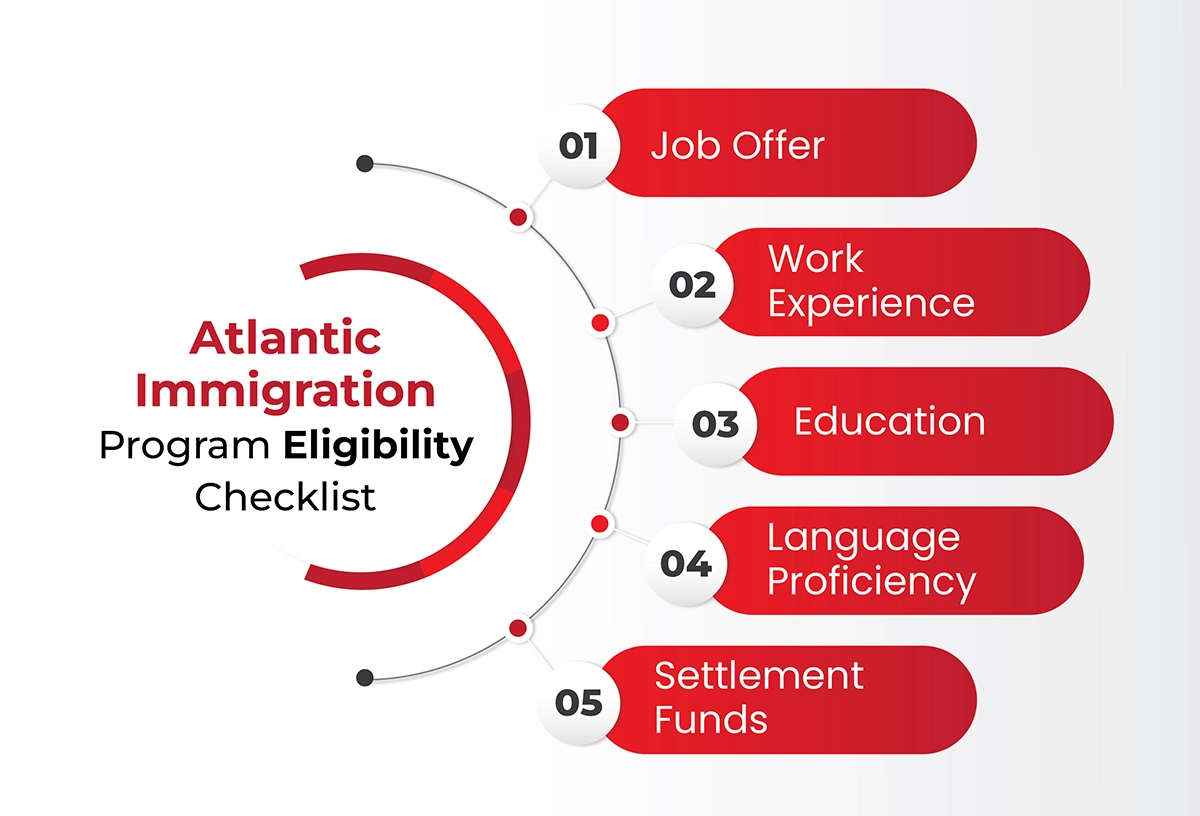
Three groups qualify: skilled workers in NOC TEER 0, 1, 2 or 3; intermediate-skilled workers in TEER 4; and international graduates of a recognised post-secondary institution in Atlantic Canada.
Language sits at CLB 4 minimum in English or French, lower than most federal streams ask for. Education starts at a high school diploma. If you earned your credential outside Canada, you need an Educational Credential Assessment. Order that early, since slow transcripts are a common cause of a stalled file.
In-demand occupations and what they pay
| Occupation | NOC | Hourly (CAD) | Annual (CAD) |
|---|---|---|---|
| Registered nurse | 31301 | $33 to $43 | $68,000 to $89,000 |
| Caregiver / personal support worker | – | $20 to $25 | $41,600 to $52,000 |
| Cook | 63200 | $16 to $22 | $33,000 to $45,700 |
| Food service supervisor | 62020 | $17 to $25 | $35,000 to $52,000 |
| Truck driver | 73300 | $23 to $29 | $48,000 to $60,000 |
| Construction worker / carpenter | – | $22 to $30 | $45,000 to $62,000 |
| Industrial butcher / meat cutter | – | $20 to $25 | $41,000 to $52,000 |
These are indicative ranges, not guarantees. A real offer moves with the employer, the province and your experience, and rural postings often pay less than the same title in Halifax.
Salary against rent, city by city
Add rent to other monthly costs for the honest floor for one person.
| City | 1-bed rent | Other monthly costs | Monthly floor |
|---|---|---|---|
| Halifax, NS | $1,300 to $1,700 | $1,200 to $1,400 | $2,500 to $3,100 |
| Moncton, NB | $1,000 to $1,400 | $1,000 to $1,200 | $2,000 to $2,600 |
| Charlottetown, PE | $900 to $1,300 | $900 to $1,100 | $1,800 to $2,400 |
| St John’s, NL | $1,100 to $1,500 | $1,100 to $1,300 | $2,200 to $2,800 |
Take roughly a fifth to a quarter off gross pay for tax and payroll deductions before comparing.
Halifax asks for about $30,000 to $37,200 a year after tax. A cook at the bottom of the range does not clear that alone, so a shared flat or a smaller city changes the answer. A nurse clears every city with room to save. Drivers and carpenters sit comfortably in Moncton or Charlottetown, tighter in Halifax. Two incomes shift the maths most.
What the settlement plan actually covers
Designation is not a formality. A designated employer must work with a funded settlement organisation on a written settlement plan for you. It usually covers school registration for your children, health card sign-up, help finding a first rental, and referrals for language training.
What it normally does not cover: flights, your rental deposit and first month, ECA and language test fees, your IRCC application costs, or private legal advice. Ask the employer in writing which items are paid and which are only pointed at. The gap is often several thousand dollars.
Opening a newcomer bank account and starting credit at zero
Open a Canadian account in your first week. Most large banks run newcomer packages that waive monthly fees for a year and do not ask for Canadian credit history. You generally need your passport, work permit or confirmation of permanent residence, and a local address.
Your credit file starts empty. Landlords, phone carriers, car lenders and some insurers all check it. A secured card, where your deposit becomes your limit, is the standard starting point. Pay it in full monthly, keep usage low, and you should have a usable score inside a year.
Budgeting the first three months
Budget for the arrival gap rather than the salary. Before your first full paycheque you face a deposit plus first month of rent, basics for an empty flat, winter clothing for everyone, phone and internet setup, and groceries with no income arriving yet.
Using the city ranges above, a family of four should plan on roughly $8,000 to $12,000 for three months in Moncton or Charlottetown, and more in Halifax or St John’s. Keep that money liquid and separate from what you set aside for application costs.
The five steps to permanent residence
- Find a designated employer in one of the four provinces.
- Receive a full-time, non-seasonal job offer.
- The employer arranges your settlement plan and applies for provincial endorsement.
- You submit your permanent residence application to IRCC.
- Optionally apply for a temporary work permit so you can start earning sooner.
Costs vary by family size and change over time, so check the current IRCC fee schedule rather than a figure from a forum.
What permanent residence gets you
Permanent residence can arrive within months of applying, and it brings access to public healthcare, free primary and secondary schooling for your children, and eligibility for Canadian citizenship after three years as a permanent resident. Our guide on sets out how this compares with other streams.
If your language scores are strong and you have no Atlantic job offer yet, read the alongside this one.
The parts people find hard
The job markets are small. Losing a role in Charlottetown means fewer replacements than in Toronto or Vancouver, and switching employers takes planning.
Winters are long and cold, public transport thins out fast outside the main cities, and a car is close to mandatory in smaller centres.
FAQ
Do I need a job offer before I apply?
Yes. The offer is the foundation of the whole program. It must be full-time and non-seasonal, and it must come from an employer the province has designated. Without that offer there is no endorsement, and without endorsement IRCC has nothing to assess under this stream.
How long does the process take?
Many permanent residence applications under this program are processed in six months or less once submitted. Your own timeline also includes finding a designated employer, waiting for provincial endorsement, and completing an ECA and language test, so start those pieces before you have an offer in hand.
Can I start working before permanent residence is approved?
Often yes. After endorsement you can optionally apply for a temporary work permit so you begin earning while IRCC processes the permanent residence application. Many people take this route because it shortens the period with rent going out and no Canadian income coming in.
What if I want to leave the endorsing province?
You are a permanent resident with mobility rights once you land, but the program is built on genuine intent to settle in the endorsing province. Leaving quickly undermines the basis of your endorsement and can raise questions. Choose the province you actually want to live in.
What to do next
Check the official designated employer directory for each province and apply directly to roles that match your NOC. Book your language test and start your ECA now, since both take weeks and neither depends on an offer. Price out one city properly using the rent and cost figures above, then confirm current fees on the IRCC site. If nothing on the occupation list fits you, look at .
Fees and rules change; verify current requirements on the official IRCC website before you apply.